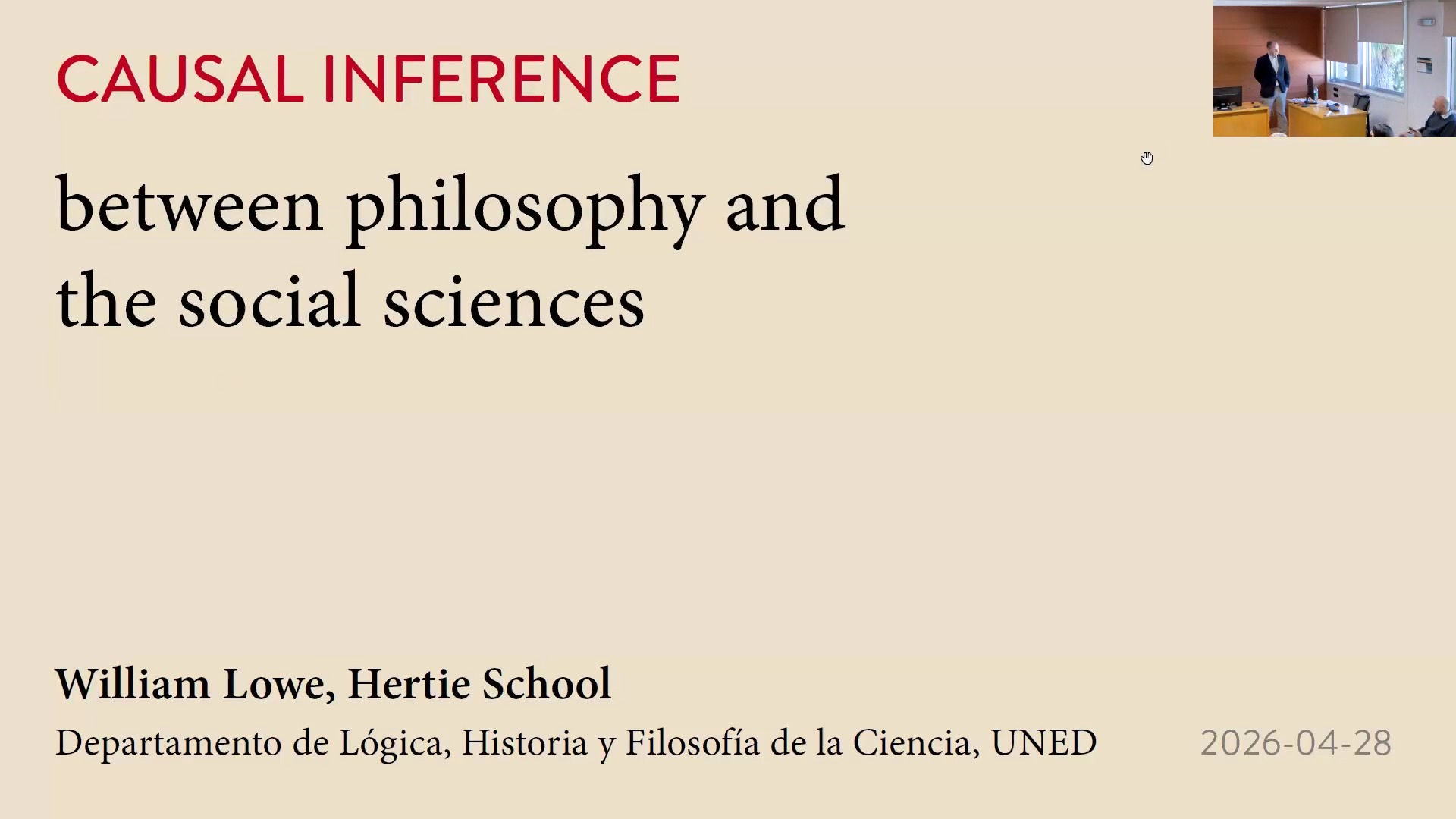
Causal inference, between philosophy and the social sciences

A loose collection of mechanism-supported counterfactuals, interventions, and directed acyclic graphs (DAGs) has become the standard framework for causal inference in the social sciences and increasingly machine learning. It has proved enormously helpful, both theoretically and practically, to working social scientists but its extended application has also raised difficult issues previously of primary interest mostly to philosophers. These include: questions about the nature of social mechanisms as a foundation for external validity; limitations of DAGs for describing mechanisms spanning different organizational levels, a situation that describes most social science and all panel-structured data; the existence of particular counterfactuals, in particular ‘cross-world’ counterfactuals such as the role of actual race in a police interaction that an individual would only have experienced had their race been counterfactually different, that are required for some causal accounts of fairness; the disadvantages and advantages of conditioning on common effects, ‘colliders’, either implicitly as part of the data generating process, e.g. the ‘birth weight paradox’ in epidemiology or explicitly as researchers condition on a colliding match variable to cancel a treatment-confounder pathway; and the role of graph unfaithfulness, whether created by conditioning, control relations, or equilibrium phenomena, for example in government regulation, competitive markets, or military deterrence. In this talk I would like to sketch out some of the conceptual issues in these examples and offer them as interesting and possibly fruitful points of empirical contact for philosophers of science. But also, since these are current issues with implications for public policy, I would also appreciate some philosophical help to think more clearly about them.
-
Participante: William Lowe ()Licencia: Copyright (Licencia propietaria)Visto: 52 veces